










Think about the last time you did a grocery run and came out surprised at the total. Maybe you didn’t buy anything unusual. Just the usual things, the stuff you always get. And the receipt still felt off. That’s not a personal finance problem. It’s a math problem, and a new report suggests a lot of Americans are experiencing it.
The Urban Institute released findings on July 13 from its Well-Being and Basic Needs Survey, which covered more than 10,000 adults. What it found is that groceries have become a source of debt for a significant and growing share of American households, and the situation has been getting worse.
How Americans are actually paying for food right now
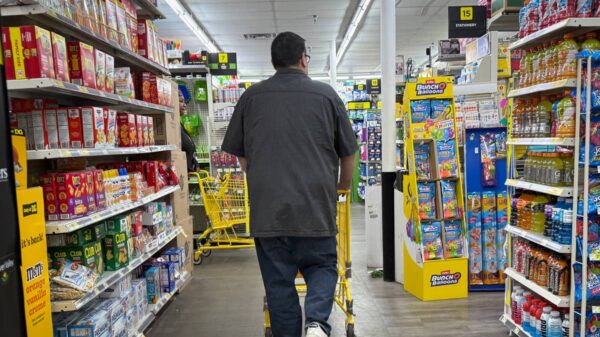
About 63% of working-age adults used a credit card to buy groceries last year, CBS News reported. Most paid the balance off. But more than one in four didn’t. Of that group, 19.6% paid less than the full balance but kept up with minimum payments. Another 8.7% didn’t always make the minimum at all. That last number was 7.1% just two years ago. It’s moving in the wrong direction.
More Economy:
- JPMorgan doubles down on economy, inflation outlook
- Central bankers grow nervous about AI funding
- BofA sees new trends forming in the K-shaped economy
Buy now, pay later has crept into the grocery aisle too. Nearly one in ten adults used BNPL to cover food purchases last year, and more than a third of those borrowers (34.8%) missed a payment, the Urban Institute found. And about 20% of working-age adults said they’d dipped into savings that were never meant to cover routine expenses just to pay for groceries.
Who is taking the worst of it
Lower- and middle-income households are carrying most of this. About 12% of them missed a credit card minimum payment on grocery purchases last year, which is roughly triple the rate for higher-income consumers. They were also about four times as likely to miss a BNPL installment as higher-earning households, Fox Business reported.
“For low- and moderate-income families, [groceries are] a really big portion of their budget, and so when food prices increase, they have much less breathing room to accommodate that,” said Kassandra Martinchek, co-author of the study and a public policy expert at the Urban Institute.
A May CBS News poll found more than three-quarters of Americans believe their incomes aren’t keeping up with inflation. That’s not just a feeling. Recent inflation data has outpaced wage growth, which means a lot of households are effectively earning less in real terms than they were a year ago.
Milky/Getty Images
Why this is happening and why it’s getting harder
Grocery prices are up 32% over the past five years. That alone would be a lot to absorb. But 2026 has added fresh pressure. The ongoing Iran conflict has pushed energy costs higher, and consumer prices hit their highest level in more than three years earlier this year. Households that managed to get through the first wave of inflation by cutting other spending are running out of room to cut.
Food stamps are part of this story too. SNAP enrollment has fallen by nearly 5 million people over the past year, landing at about 37 million as of March. That drop came after Republicans passed new work requirements in 2025 through the “One Big Beautiful Bill Act,” which cut off benefits for people who couldn’t meet them. So at the same time grocery prices are climbing, fewer households have food assistance to fall back on.
The Urban Institute was direct about what all of this adds up to: “Although access to credit and savings can provide a lifeline for families struggling to meet basic needs, relying too much on these strategies may lead to financial instability if they have a hard time keeping up with debt or do not recover financially after drawing down savings.”
What this tells us about the broader economy
Total US household debt hit $18.8 trillion in the first quarter of 2026, up about $740 billion from a year earlier. The grocery debt story is one piece of that number, but it’s a telling piece because food is the least discretionary spending category there is. When people are borrowing for groceries, there isn’t much further to go before something else in the budget breaks.
Once savings get drained and card balances build up, families have less cushion for anything unexpected: a medical bill, a car repair, a job disruption. The debt doesn’t disappear; it just makes the next problem harder to handle. And for lower-income households already missing minimum payments, the fees and credit damage that follow make future borrowing more expensive too.
For anyone watching consumer spending trends, this is worth paying attention to. Credit card usage staying elevated even at high interest rates looks like consumer resilience on the surface. But when a meaningful chunk of that borrowing is going toward basic food purchases that people can’t pay off, that’s not resilience. It’s depletion.
Related: Customer trend sends Kroger, grocery chains worrisome signal