











What Does PayPal Add to Meta’s Muse?
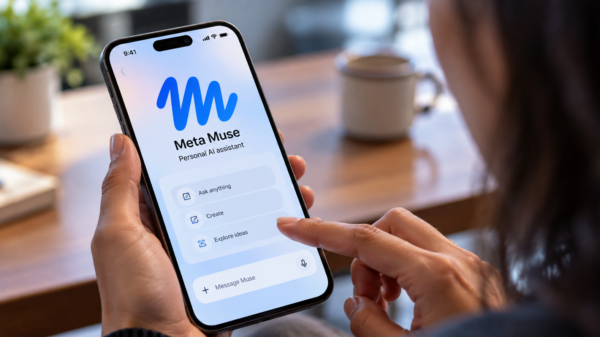
PayPal has joined Meta’s expanding payments network for Muse, giving users of the personal AI agent another way to complete purchases while extending PayPal’s merchant network into agent-driven shopping.
The integration allows PayPal customers to use Muse to shop and complete purchases at participating PayPal merchants. For Meta, the deal adds another established checkout option as it builds commerce directly into an AI agent that can search for products, interact with websites and act on a user’s instructions.
Muse launched on September 8 and differs from a conventional chatbot because it can perform tasks rather than simply provide answers. The agent can book travel, complete forms and make purchases, including continuing longer tasks in the background while requesting user approval before sensitive actions.
That ability already made payments a central part of Meta’s Muse launch. Adding PayPal now expands the number of merchants and payment credentials that can sit behind those agent-driven transactions.
How Does Muse Complete Purchases?
Meta launched Muse with Stripe’s Link wallet, allowing U.S. consumers to connect saved payment methods and authorize purchases through the agent. Link can complete checkout directly at more than one million businesses that support the service and can generate a single-use virtual card for approved purchases elsewhere.
PayPal gives Muse access to another large payment ecosystem rather than requiring the agent to rely on a single checkout infrastructure. Meta has also integrated Shopify’s Shop Pay and opened Muse to Shopify’s merchant catalog, creating multiple routes through which the agent can move from product discovery to payment.
The model is increasingly important because the competition in AI shopping is moving beyond which assistant can recommend the right product. The harder problem is whether that assistant can actually complete the transaction across enough merchants, payment methods and websites to become useful.
PayPal has already been building toward that model. Its earlier agreement to bring PayPal checkout into ChatGPT connected its merchant network to another AI shopping interface, showing that the company is pursuing distribution across multiple agent platforms rather than betting on one ecosystem.
Investor Takeaway
The strategic value for PayPal is not simply another checkout integration. If consumers increasingly ask AI agents to find products and complete purchases, payment companies will compete to become the infrastructure those agents use automatically. Merchant reach, stored credentials and trusted authorization could become more important than owning the shopping interface itself.
Why Is PayPal Preparing Merchants for AI Agents?
The Muse deal follows PayPal’s September support for WebMCP, an emerging standard designed to make existing merchant websites easier for AI assistants to understand and interact with.
For participating PayPal merchants, WebMCP can expose structured information about products, inventory, carts and checkout to compatible agents without requiring merchants to build a separate AI storefront. The consumer can still approve the payment through PayPal while the agent handles more of the discovery and navigation process.
That matters if agentic commerce develops through the existing web rather than through a handful of closed AI marketplaces. PayPal can potentially make merchants already using its infrastructure accessible to new AI shopping interfaces without forcing those businesses to rebuild their checkout systems.
The payments industry is moving in the same direction. Visa has been developing infrastructure for AI agents to initiate transactions under predefined controls, while a live European test involving Worldline, ING and Visa has already shown that agent-driven purchases can operate within existing banking and authentication rules.
Who Controls the Checkout in Agentic Commerce?
The emerging competition is creating several layers. Meta, OpenAI and other AI companies can control the consumer interface. Shopify and other commerce platforms can provide merchant catalogs. PayPal, Stripe and card networks can provide payment credentials, authorization and settlement.
No single company necessarily needs to control every layer. For PayPal, that could be an advantage. Its business can benefit whenever an agent sends a customer to a PayPal-supported merchant or uses PayPal to complete the transaction, even if another company owns the AI assistant itself.
The challenge is that the same logic attracts competitors. Stripe’s Link already gives Muse broad checkout coverage, while Shop Pay creates another direct route into Shopify stores. Amazon has taken a different approach by blocking Muse from shopping on its platform, showing that merchant access cannot be assumed.
That makes coverage the immediate battleground. An AI shopping agent becomes more useful as the number of websites, catalogs and payment systems it can transact with increases. By adding PayPal, Meta is expanding that reach, while PayPal is making sure its merchant network remains part of the transaction if shopping begins moving from browser tabs to AI agents.