











You can be right about the science and still lose every dollar you put in.
That is the hardest lesson in small-cap investing, and it shows up in credit agreements and amendment schedules, not in press releases.
Here is how the game usually works. A young drug company raises money against a future event, an FDA decision, a trial readout, a launch.
Lenders size the loan to the story. You size your position to the same story. Everyone stares at the catalyst date.
The debt has its own date, and it does not care about the catalyst.
A term loan with quarterly amortization and a fixed maturity keeps ticking whether the drug works or not. If the cash runs out before the catalyst arrives, the catalyst still happens. It just belongs to someone else.
That is not a theoretical risk. It happened last month, to a company sitting ten weeks away from the approval it spent years chasing.
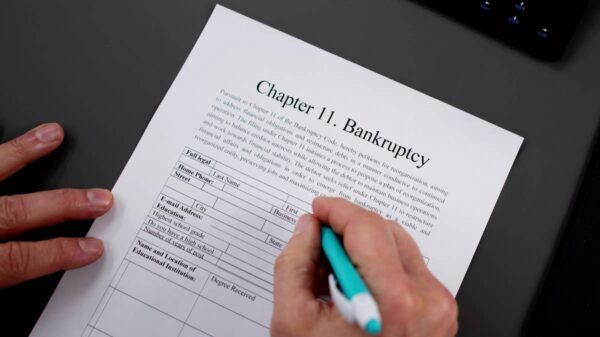
BioXcel Therapeutics (BTAI) is the latest company to prove it. The New Haven, Connecticut, biotech filed for Chapter 11 on Aug. 27, 11 weeks before the FDA is due to rule on an expanded label for its only approved product.
Why BioXcel’s debt schedule beat its FDA catalyst
BioXcel makes Igalmi, a film placed under the tongue to treat acute agitation in adults with schizophrenia or bipolar disorder. The FDA approved it in April 2022 for supervised medical settings, and the company is waiting on an application to let patients use it at home. That decision is due Nov. 14, according to BioXcel’s Aug. 28 announcement.
Two weeks after that 2022 approval, BioXcel signed a financing package with funds affiliated with Oaktree Capital Management and the Qatar Investment Authority. The money was raised against a launch.
More Bankruptcy Coverage:
- 50-year-old theme and water park to close forever after summer season
- Loss of Costco deal helps push beverage brand into Chapter 11
- 39-year-old ammunition manufacturer files Chapter 11 bankruptcy
The launch never happened at scale. Product revenue never topped $2.3 million in any year, and in 2025 it came in at $600,000, down 72%, while the net loss widened to $69.9 million, per the company’s annual report.
Cutting the sales force to preserve cash then made the revenue problem worse, the loop small drug companies rarely escape.
Meanwhile the debt did what debt does. Pricing moved to a fixed 13%, and quarterly amortization of 5% of principal kicked in at the end of March 2026.
The credit agreement was amended 14 times between November 2023 and August 2026, according to BioXcel’s SEC filings.
Read that number again. Fourteen amendments. Each one bought a few more months and cost a little more control.
Related: BofA makes bullish call on newly public biotech stock
By July the lenders required a “definitive strategic transaction on terms acceptable to them,” plus a committee with exclusive authority over any sale, per the July 3 amendment.
The 14th amendment, signed Aug. 24, three days before the filing, advanced $1.25 million of bridge money against a $250,000 upfront fee. That is 20% of the new principal, charged for three days of runway.
That is not a lender extending a lifeline. That is a lender steering.
What Teva is actually paying for BioXcel
Teva Pharmaceuticals (TEVA) signed on as stalking horse bidder for substantially all of BioXcel’s assets. The floor bid is $57.5 million in cash at closing, plus up to $67.5 million tied to how fast the at-home application clears, according to BioXcel’s Aug. 28 filing.
Those milestones price the remaining life of this company almost to the month:
- Approval by Nov. 21, one week after the target date, pays the full $67.5 million, per Fierce Biotech.
- Approval by Feb. 28, 2027, drops the payment to $55 million, per the same report
- Approval by May 31, 2027, drops it to $20 million, according to the asset purchase agreement filed with the court.
- Approval by Nov. 30, 2027, pays $5 million, per the same agreement
Do the arithmetic. Top rung to bottom, the value Teva assigns to BioXcel’s timeline falls $62.5 million over roughly 12 months, about $5.2 million for every month the agency takes.
Only one of those payments is ever made, and separate sales milestones apply only if approval slips past February 2027. That caps the deal at $125 million, not $145 million.
The payments also run solely on the at-home version, so today’s hospital sales of Igalmi earn the estate nothing. And Teva has no obligation to chase any milestone, with no efforts standard attached, per the filed agreement.
The deal gives the company “a clear framework to pursue a value-maximizing transaction,” Chief Executive Vimal Mehta said in the announcement.
Competing bids are due Oct. 9, with an auction Oct. 14 and a targeted closing Oct. 26, per the bidding procedures motion. A rival has to clear $60.2 million in cash just to be heard.
What the Nasdaq delisting means if you own BTAI
This is the part that matters most to individual holders, and it is already happening.
Nasdaq notified BioXcel on Aug. 31 that it will delist the stock over the Chapter 11 filing. Trading is suspended at the open Sept. 8, and the company will not appeal, according to BioXcel’s Sept. 1 filing.
Shares are expected to move to the Pink Limited Market, which the company acknowledges is a far thinner venue that could push the price down further.
Sept. 4 was the last regular Nasdaq session, with markets closed Sept. 7 for Labor Day. If you planned to decide next week, the exchange decided for you.
Now the math. About $112 million was outstanding to the Oaktree-affiliated lenders when BioXcel filed, and the bankruptcy loan approved on top of that runs to $77.25 million, only $19 million of it new cash.
Against that, the stalking horse pays $57.5 million at closing.
You do not need a restructuring background to finish the sentence. The cash on the table does not cover the secured debt, let alone the roughly $17 million of trade and professional claims behind it. Barring a bidding war, common shareholders get nothing.
That is the standard order in Chapter 11. Secured lenders first, unsecured creditors second, equity last.
The lesson for small-cap biotech investors
BioXcel called itself an artificial intelligence company and earned the label. It screened existing molecules for new uses and got a real FDA approval out of it, which is more than most AI drug-discovery stories can claim.
None of that saved it, and the reason is boring. The balance sheet had a schedule, and the science did not.
In my analysis of small-cap credit agreements, the amendment count is the most underused warning sign retail investors have, and it is free to check. When you hold a small cap that is one approval away, ask three questions before you add.
When does the debt mature or amortize, and is that before or after the catalyst? BioXcel’s loans matured April 2027 and amortization started March 2026. The money ran out in the gap.
How many times has the credit agreement been amended? The 8-K trail will tell you. One amendment is housekeeping. Fourteen is a company living quarter to quarter at its lenders’ pleasure.
How much debt sits ahead of you, and what would a buyer pay? When I lined those two numbers up here, the second came in smaller, which makes the shares an option on a bidding war rather than a claim on a business.
One more thing is worth sitting with. In June 2023, BioXcel disclosed that an outside investigator on a key trial had fabricated emails to the FDA. An audit cleared the data, but the stock fell roughly 64% in a day and never again raised equity on decent terms.
Three years later, a company that may be weeks from an FDA approval is selling itself for less than it owes.
Watch two dates from here. The Oct. 9 bid deadline tells you whether anyone besides Teva wants these assets. The Nov. 14 FDA date tells you what they were worth.
The drug might still work. The trade already did not.
Related: Bank of America sees major upside in this biotech stock