














Key takeaways
- LINK rose about 6% while much of the crypto market retreated, extending its reported 30-day gain to 30.3%.
- Chainlink’s CCIP 2.0 launch gives institutions the option to add their own cross-chain transaction verifiers.
- LINK met resistance near $15, while the supplied chart analysis identifies $12-$13 as a potential support zone.
Chainlink’s LINK token outperformed a weaker crypto market following the launch of Cross-Chain Interoperability Protocol (CCIP) 2.0.
The token gained about 6% in the session described in the supplied analysis, taking its 30-day advance to 30.3% and its year-to-date return into positive territory.
The upgrade gives financial institutions more control over transactions that move data or assets between blockchains.
Traders appeared to welcome the announcement, though LINK’s approach to $15 brought a technical test after its recent rally.
CCIP 2.0 adds institution-operated verifiers
Cross-chain transfers require a way to confirm that an action occurred on one blockchain before a corresponding action is completed on another. CCIP provides that communication layer.
With version 2.0, institutions and asset issuers can add Cross-Chain Verifiers to apply their own checks alongside Chainlink’s default verification network. Chainlink says starter kits will let users run those verifiers on infrastructure including Amazon Web Services and Google Cloud.
The added checks could matter to firms with internal security or compliance requirements. An issuer, for example, may want a transfer to proceed only after its own verifier has approved it.
CCIP 2.0 also offers configurable compliance controls, fees, and execution options, allowing users to choose how a transaction is checked and completed. These features are optional; Chainlink says its existing verification network remains the default.
Speed is another part of the upgrade. CCIP 2.0 supports faster-than-finality transfers where a user’s chosen risk settings permit them.
Chainlink also says it is working to support Ethereum’s Fast Confirmation Rule when that feature launches. Its future integration should not be treated as a speed improvement already available for every Ethereum transfer.
The supplied market analysis reported an 89% jump in LINK trading volume following the CCIP 2.0 announcement.
Higher volume shows that more tokens changed hands during the move, but it does not, by itself, show whether buyers will remain in control.
The same analysis cited a recovery in Chainlink’s total value secured from about $43 billion in June to $57 billion in August. That metric describes value associated with assets using Chainlink services; it is distinct from revenue earned by Chainlink or the market value of the LINK token.
The product announcement gives traders a reason to reassess Chainlink’s role in institutional blockchain infrastructure. Even so, a network upgrade does not automatically create immediate demand for LINK. Adoption, usage, and the broader market’s direction will matter to whether the price move lasts.
Can LINK break above $15?
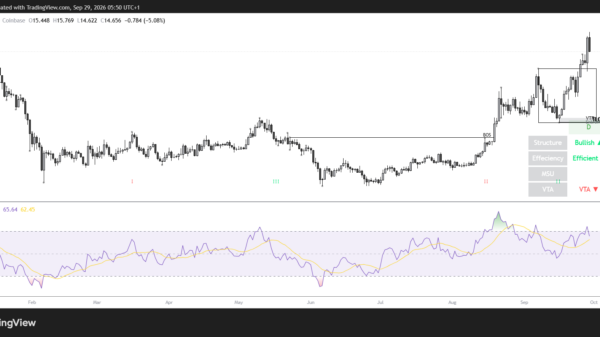
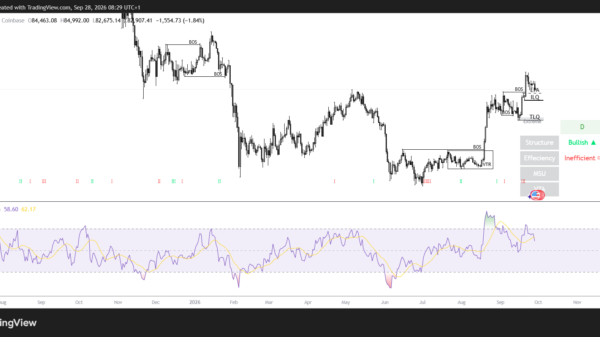
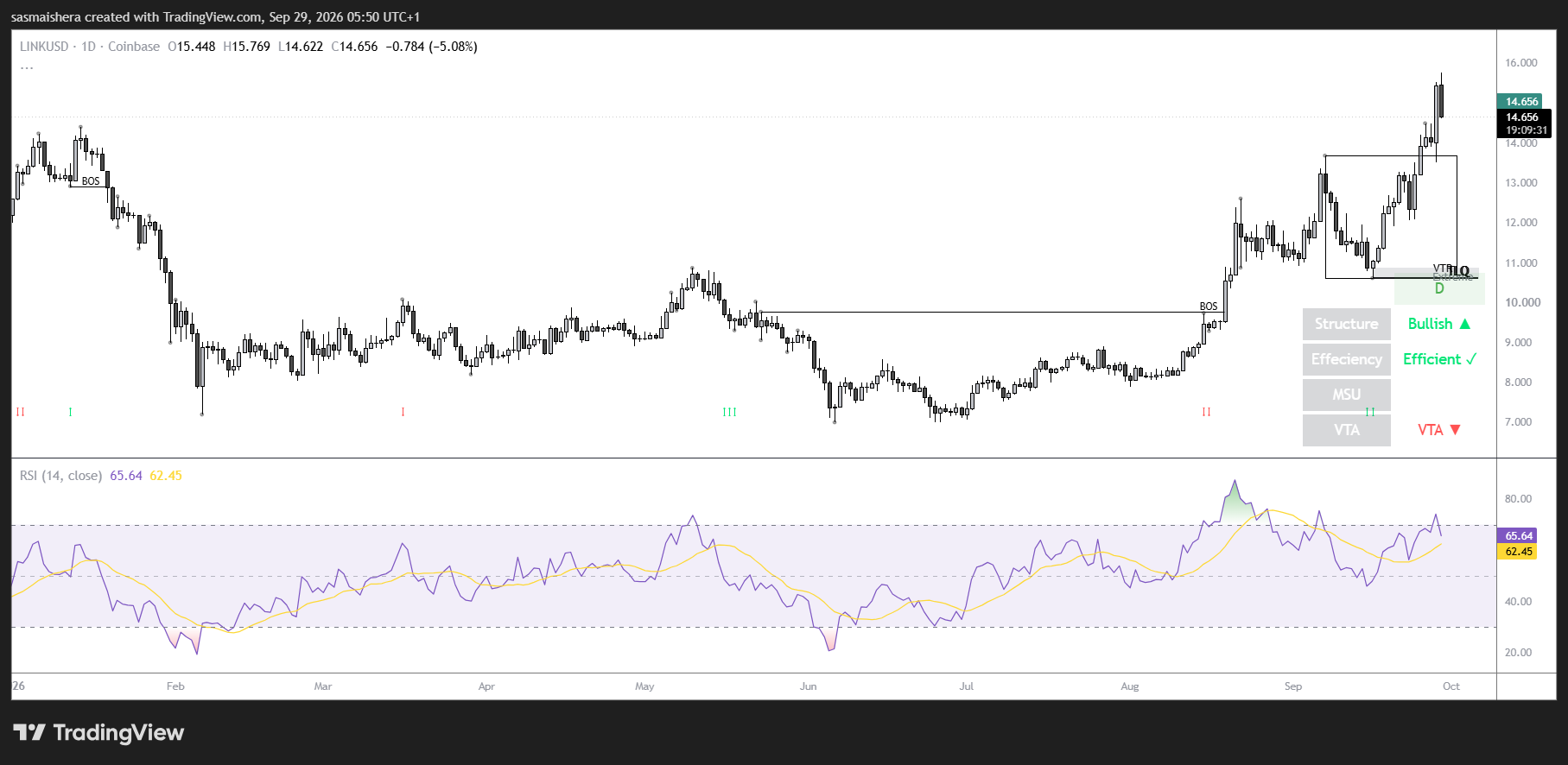
LINK’s advance encountered selling pressure near $15, a level the supplied daily-chart analysis identifies as immediate resistance.
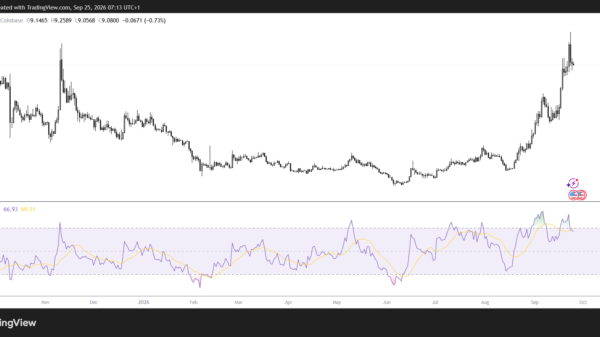
It also noted a bearish divergence in the relative strength index: price strengthened while the momentum reading weakened. Such a signal can precede a pause or pullback, although it does not establish that one must occur.
If LINK retreats, the analysis places a possible support zone at 12–13. Holding that area could leave the broader recovery intact, while a decisive break below it would weaken the bullish setup.
A sustained move above $15 would shift attention toward higher levels, including the article’s $20 upside scenario. From $12, a rise to $20 would be roughly 67%, but that percentage describes a hypothetical entry and exit, not an expected return.
For now, the clearest test is whether LINK can absorb selling around $15 while maintaining support if the wider crypto market remains under pressure.
The post Chainlink surges 6% after CCIP 2.0 launch, but $15 resistance tests LINK rally appeared first on CoinJournal.