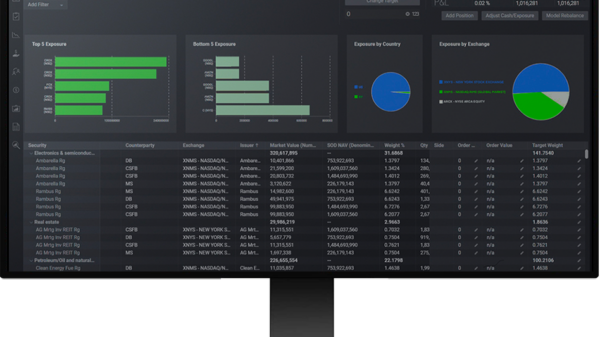














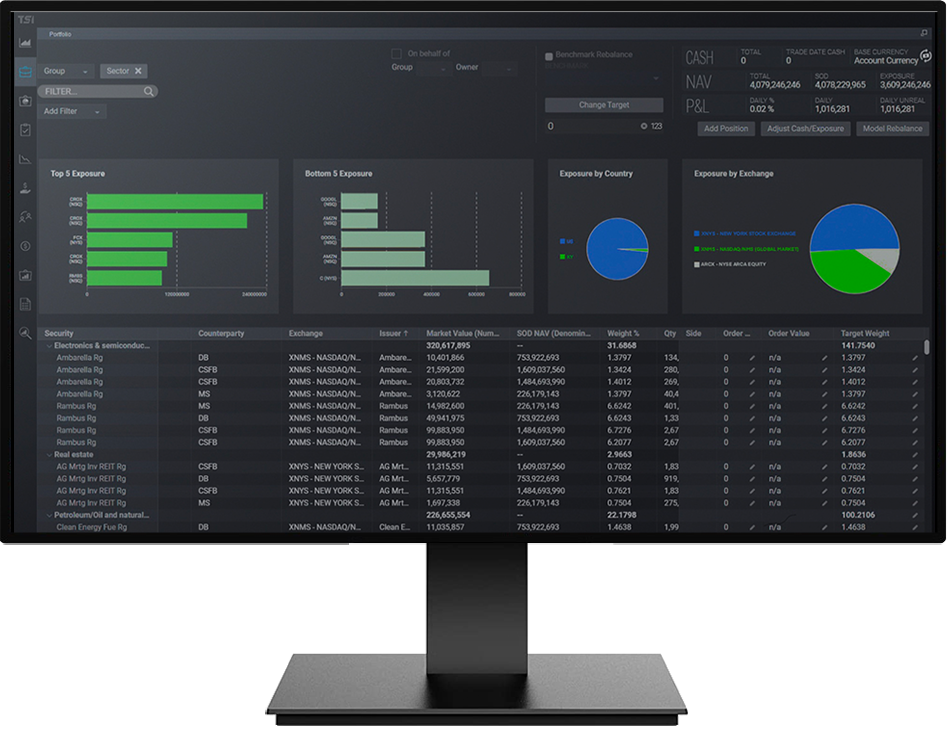
TS Imagine has integrated prediction markets data into its trading and risk management platform, allowing institutional investors to incorporate market-implied probabilities for political, economic and regulatory events directly into portfolio analytics. The move reflects growing institutional interest in prediction markets as a complementary source of forward-looking information rather than simply an alternative trading venue.
The new capability enables clients to map event probabilities to portfolio exposures and automatically update stress tests, scenario analysis, value-at-risk calculations and sensitivity models as prediction market prices change. Instead of relying solely on historical price movements and implied volatility, portfolio managers can now evaluate how changing expectations for specific future events could affect their portfolios in real time.
The announcement comes as prediction markets are attracting increasing attention from hedge funds, proprietary trading firms and asset managers. Platforms such as Kalshi have expanded beyond election contracts into economic releases, central bank decisions and geopolitical events, while traditional financial institutions have begun exploring whether these markets can improve forecasting and portfolio construction.
Prediction Markets Are Moving Beyond Speculation
Prediction markets allow participants to trade contracts tied to clearly defined future outcomes. The price of each contract reflects the market’s implied probability that a particular event will occur, creating a continuously updated estimate driven by thousands of market participants.
Historically, these markets were viewed primarily as speculative products or election forecasting tools. That perception has changed over the past two years as institutions increasingly recognise that prediction markets aggregate dispersed information quickly, often adjusting to new developments before traditional economic forecasts or analyst estimates.
Rather than replacing macroeconomic research or quantitative models, prediction markets provide another data point that reflects collective market expectations. For a portfolio manager, that information becomes valuable when assessing how a portfolio might perform if the probability of a Federal Reserve rate cut, a regulatory approval, a trade agreement or a geopolitical event suddenly changes.
This is particularly relevant for multi-asset portfolios where a single event can simultaneously affect equities, bonds, foreign exchange, commodities and derivatives. Conventional risk systems already model these relationships using historical correlations and implied volatility. Prediction markets introduce an additional forward-looking signal that can continuously reshape those scenarios.
Institutional Risk Management Is Becoming More Event Driven
Traditional portfolio risk models largely rely on historical observations. Value-at-risk calculations estimate potential losses based on previous market behaviour, while stress tests typically simulate predefined scenarios such as interest rate shocks or equity market corrections.
The limitation of those approaches is that they often struggle with binary events whose outcomes are uncertain until a specific date. Elections, court rulings, central bank meetings, regulatory approvals and trade negotiations can all trigger substantial market moves that historical data alone cannot fully capture.
By incorporating prediction market probabilities, institutions can dynamically adjust their assumptions as market expectations evolve. A portfolio manager exposed to financial stocks, for example, could immediately evaluate how changing probabilities surrounding future banking regulation alter overall portfolio risk. Likewise, macro funds can continuously reassess exposure as markets reprice expectations for inflation releases or monetary policy decisions.
The capability announced by TS Imagine automatically links those probability changes to existing portfolio analytics rather than requiring users to manually construct new scenarios every time market expectations shift.
This approach reflects a broader evolution in institutional risk management, where firms increasingly combine alternative datasets with traditional pricing information. Artificial intelligence, alternative data and real-time analytics have become increasingly important components of modern portfolio management, particularly as markets react more rapidly to political and macroeconomic developments.
Prediction Markets Have Become a Serious Institutional Asset Class
The institutionalisation of prediction markets has accelerated significantly during the past year. Regulatory clarity in the United States has allowed exchanges including Kalshi to expand the range of contracts available to professional investors, while financial technology providers have begun integrating event probabilities into broader investment workflows.
Rather than asking traders to monitor separate prediction market platforms, vendors increasingly view event probabilities as another market data feed alongside prices, volatility surfaces, interest-rate curves and economic indicators.
Several financial technology firms have already recognised this trend. Talos recently integrated Kalshi’s prediction markets into its institutional trading platform, enabling professional clients to access event contracts through existing execution infrastructure. The TS Imagine announcement extends the concept further by embedding those probabilities directly into portfolio risk analytics instead of limiting their use to trading.
For hedge funds and proprietary trading firms, this could improve decision-making around event-driven strategies. For traditional asset managers, the benefit is more likely to come from enhanced portfolio monitoring and scenario planning rather than speculative trading.
Why This Matters for Multi-Asset Institutions
TS Imagine has traditionally focused on providing integrated front-office technology spanning trading, portfolio management, prime brokerage and risk management across equities, fixed income, derivatives and foreign exchange. Its client base includes many of the world’s largest financial institutions that require consolidated analytics across multiple asset classes.
Adding prediction market data fits naturally within that strategy because institutional portfolios increasingly need to evaluate risks that cut across markets rather than individual securities.
For example, a surprise central bank decision may influence sovereign bond yields, equity valuations, currency markets and commodity prices simultaneously. A change in the perceived probability of that decision therefore becomes relevant well before the announcement itself.
Instead of waiting for markets to react after an event occurs, institutions can monitor how expectations evolve beforehand and assess whether existing positions remain consistent with their desired risk profile.
Rob Flatley, Founder and Chief Executive Officer of TS Imagine, said, “Traditional risk analysis relies on observed market prices, volatility, curves and historical relationships. Prediction markets add a forward looking, event-specific view of how market participants are pricing defined outcomes.”
Flatley added, “By connecting that signal to portfolio positions and existing risk analytics, our clients can translate changes in event probabilities into portfolio-level insight.”
The Industry Is Looking Beyond Historical Data
The integration illustrates how institutional risk management continues to evolve beyond models built exclusively on historical relationships. Market participants increasingly recognise that future expectations can move independently of historical price behaviour, particularly during periods of political uncertainty, regulatory change and macroeconomic volatility.
Prediction markets will not replace traditional quantitative models or economic analysis, but they offer an additional layer of information that reflects how market participants collectively price uncertain outcomes in real time. For technology providers such as TS Imagine, incorporating those signals into existing workflows allows institutions to analyse event risk without introducing separate systems or operational complexity.
As prediction markets continue expanding into new categories of economic and financial events, they are increasingly becoming another institutional data source rather than simply another venue for speculative trading.